LibraryYou asked
Updates & insights
Practical explanations, platform changes and regulatory developments for teams that need decisions they can defend.
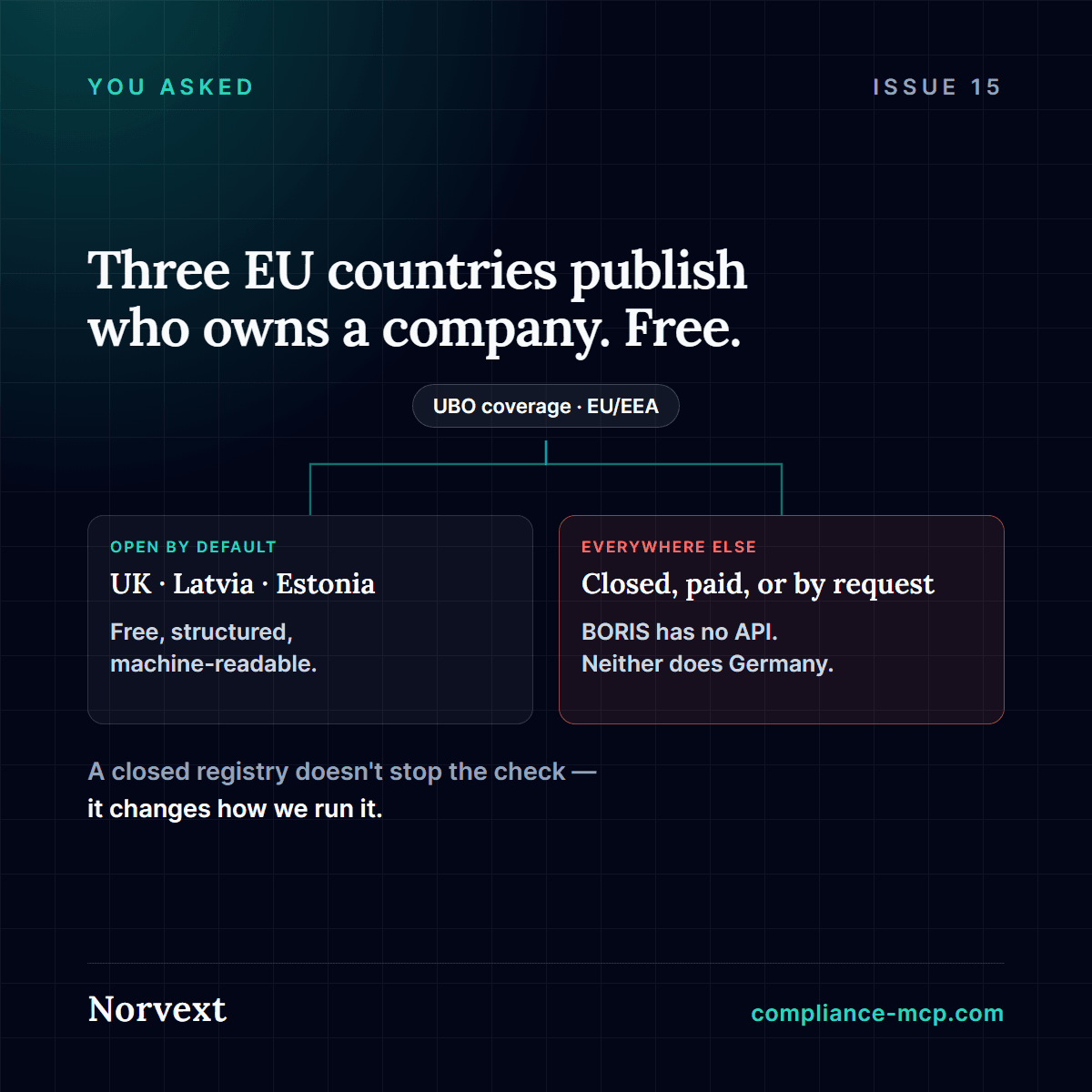
Free, open beneficial-ownership data exists in three EU countries. Here's how we cover the rest.
Companies House, Latvia's UR and Estonia's e-Business Register hand over who actually owns a company — free, open, machine-readable. Most of the EU closed that door in 2022. The EU's own fix, BORIS, has technically connected only 17 of 30 countries so far, and even there it's a manual, one-company lookup, not an API. We don't wait for that to get fixed — where a registry is closed or paid, we connect a provider for that specific country.
Read publication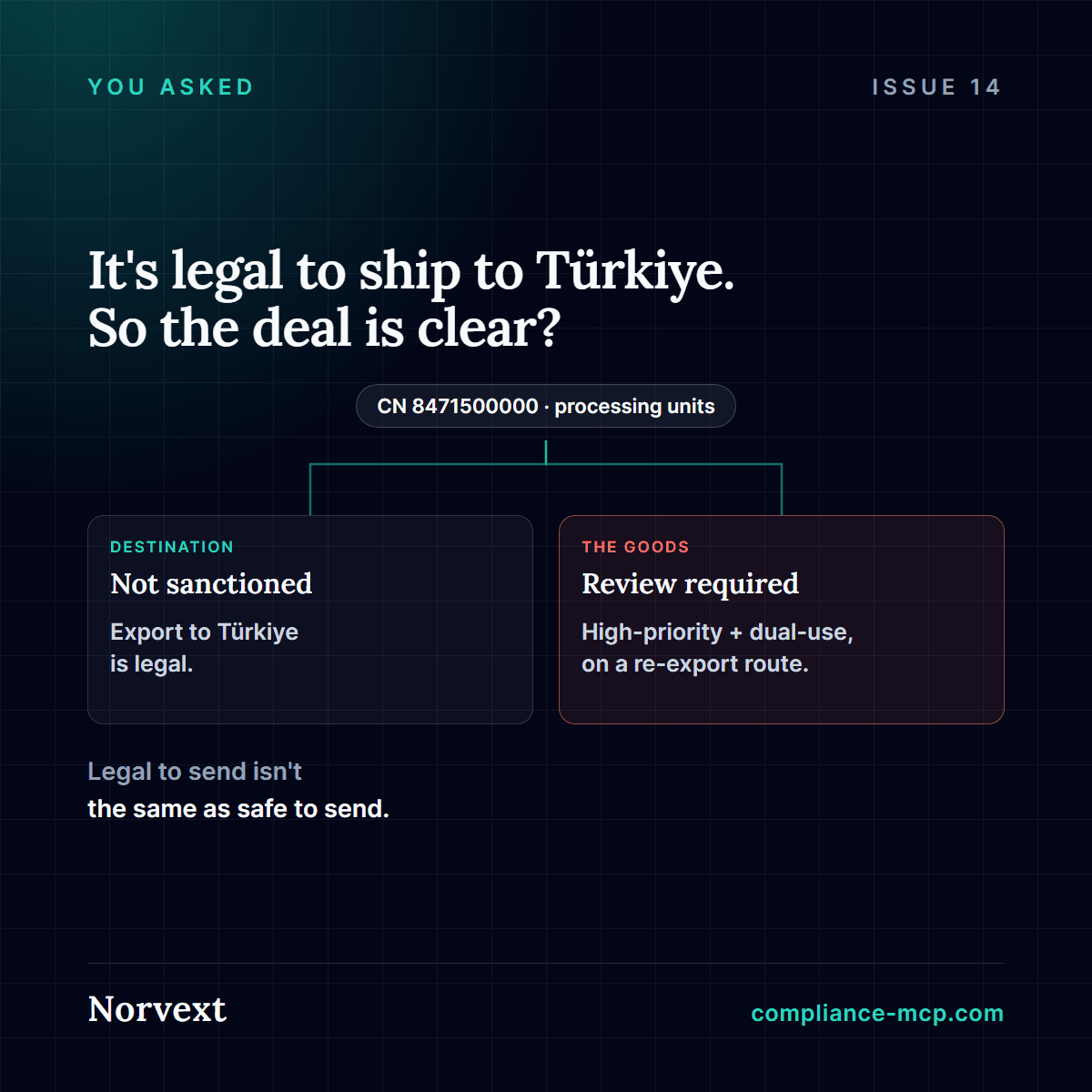
It's legal to ship to Türkiye. That isn't the same as a clear shipment.
"The destination isn't sanctioned" is a fact about the country, not about the goods. For a high-priority item, a legal export to Türkiye, Kazakhstan, Armenia or the UAE is exactly the diversion route — and the check says so.
Read publication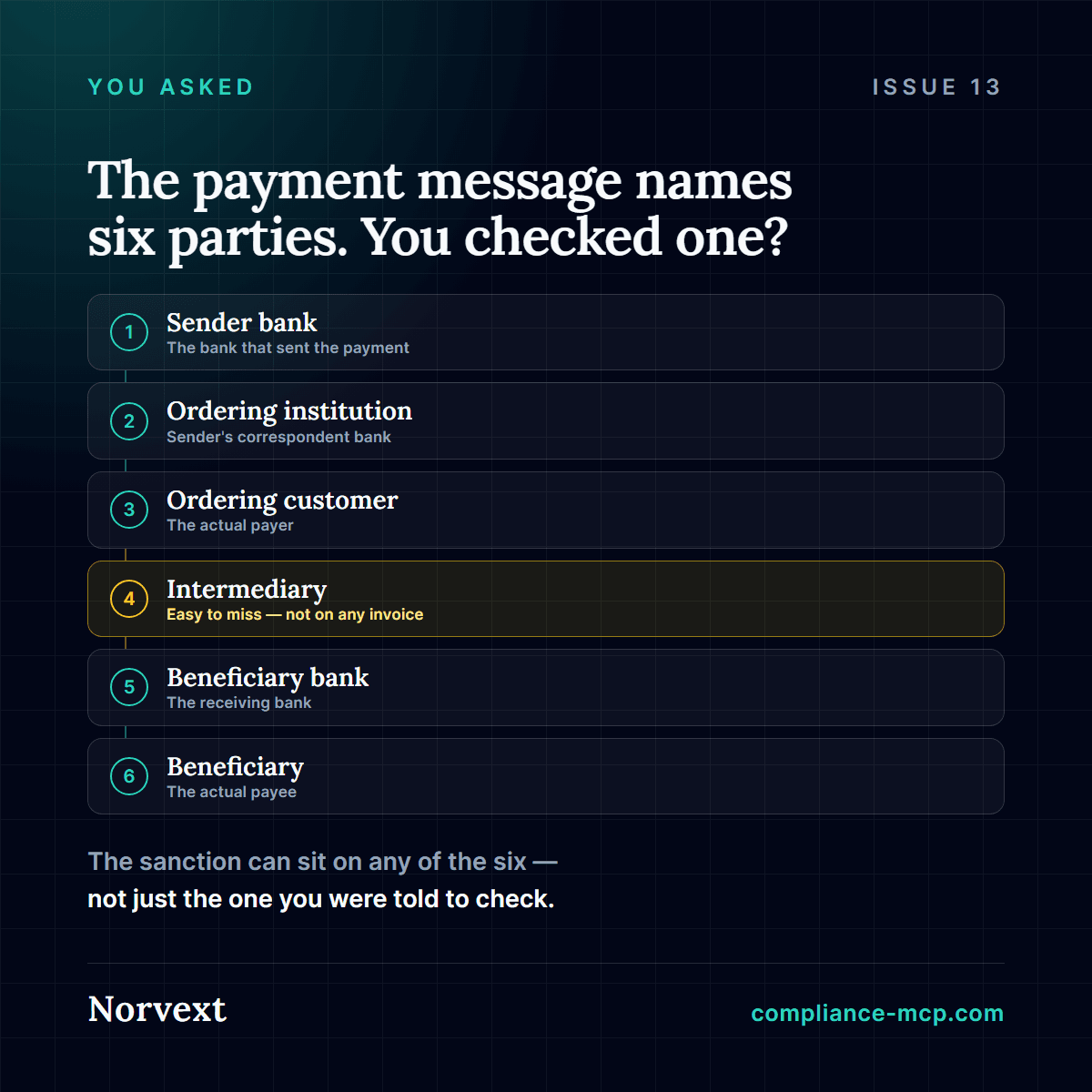
The payment message names six parties. You checked one?
A wire instruction isn't one name — an ISO 20022 message names up to six parties across the chain, and sanctions exposure can sit on any of them, not just the one you were told to check.
Read publication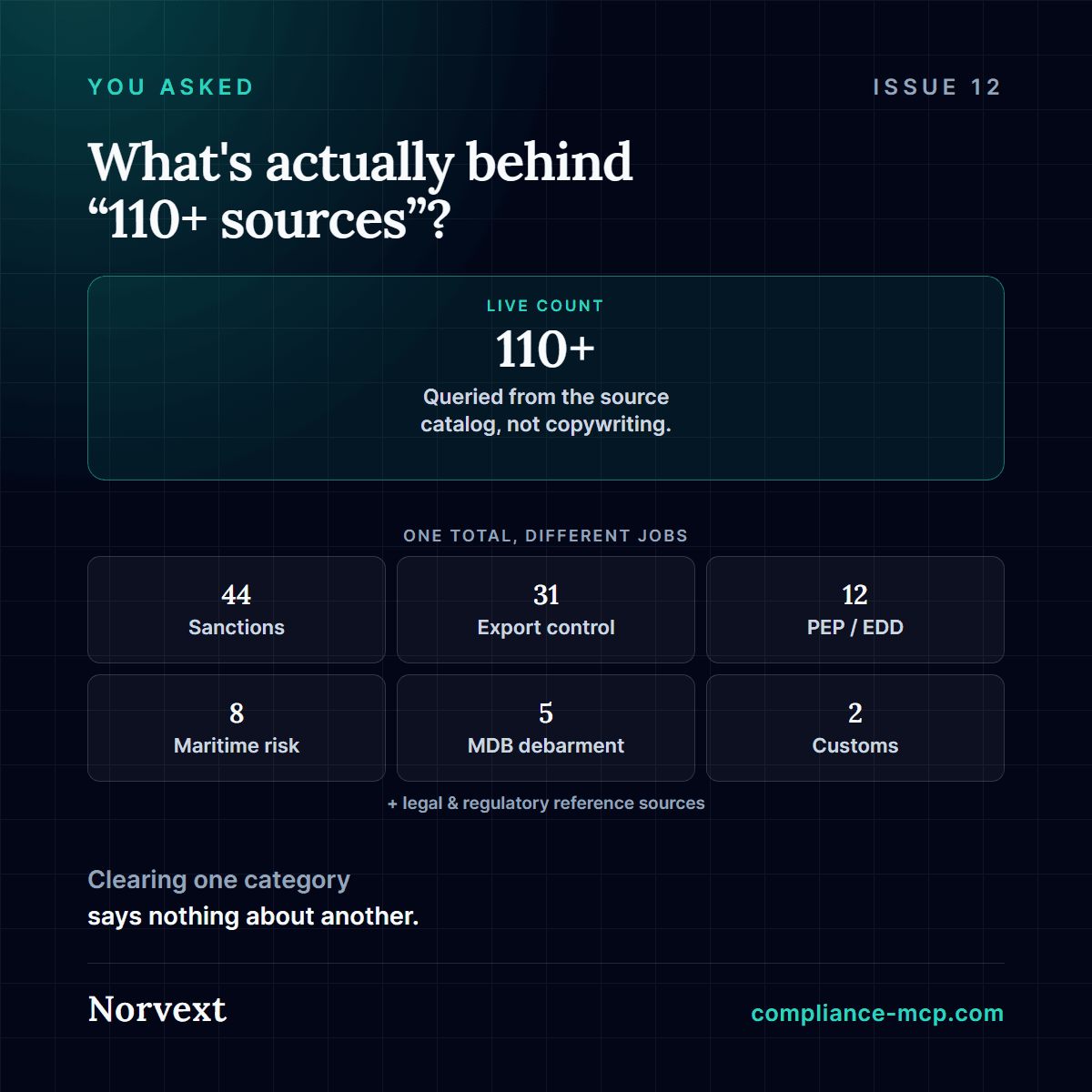
What's actually behind "150+ sources"?
It's a real number, not a marketing round-up — a live count from the source catalog, not copywriting. But it's a sum across categories that do very different jobs, and no single check you run touches all of them.
Read publication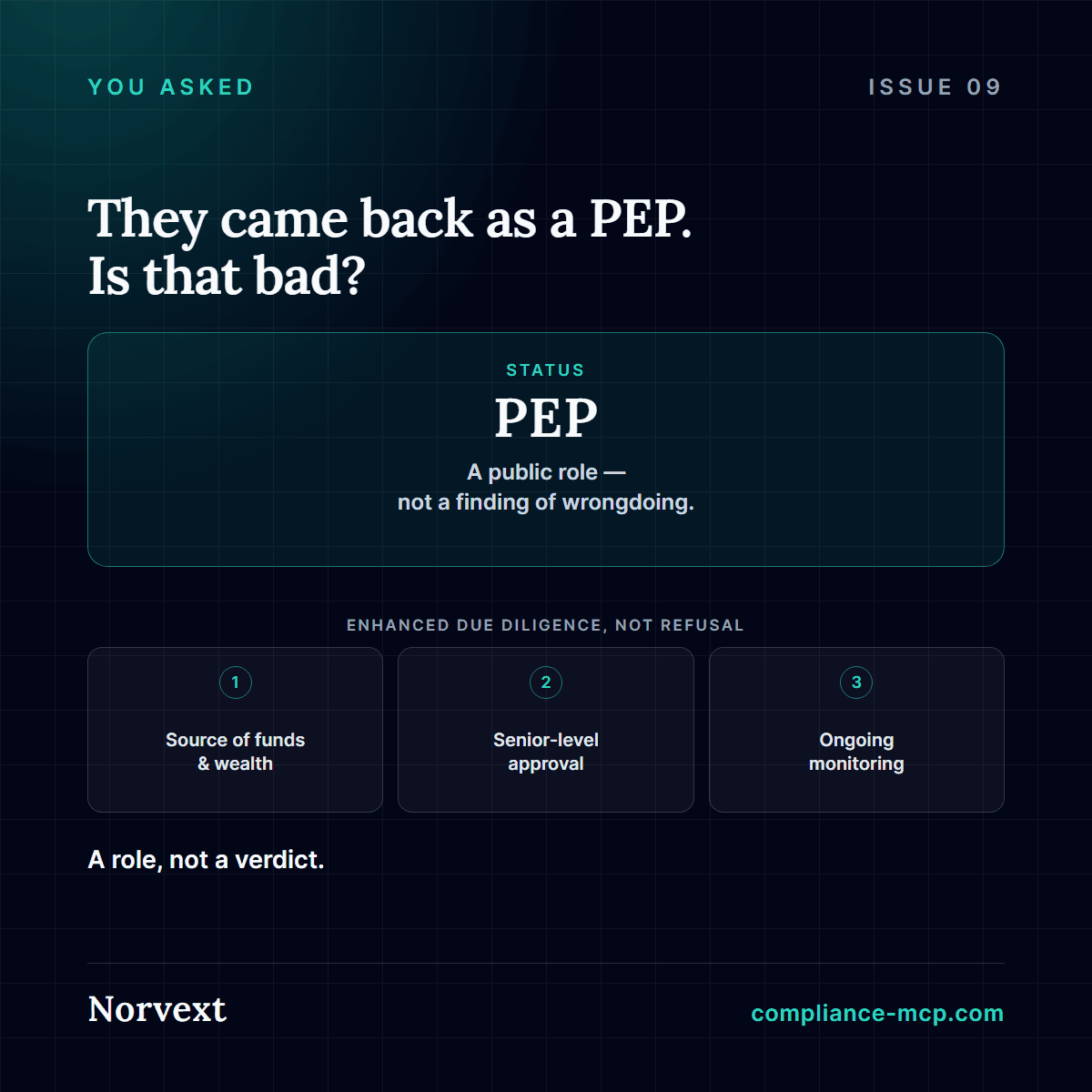
They came back as a PEP. Is that bad?
A PEP hit is a signal to look closer, not a reason to say no. Refusing every politically exposed person on sight is a documented supervisory mistake, not a compliance best practice.
Read publication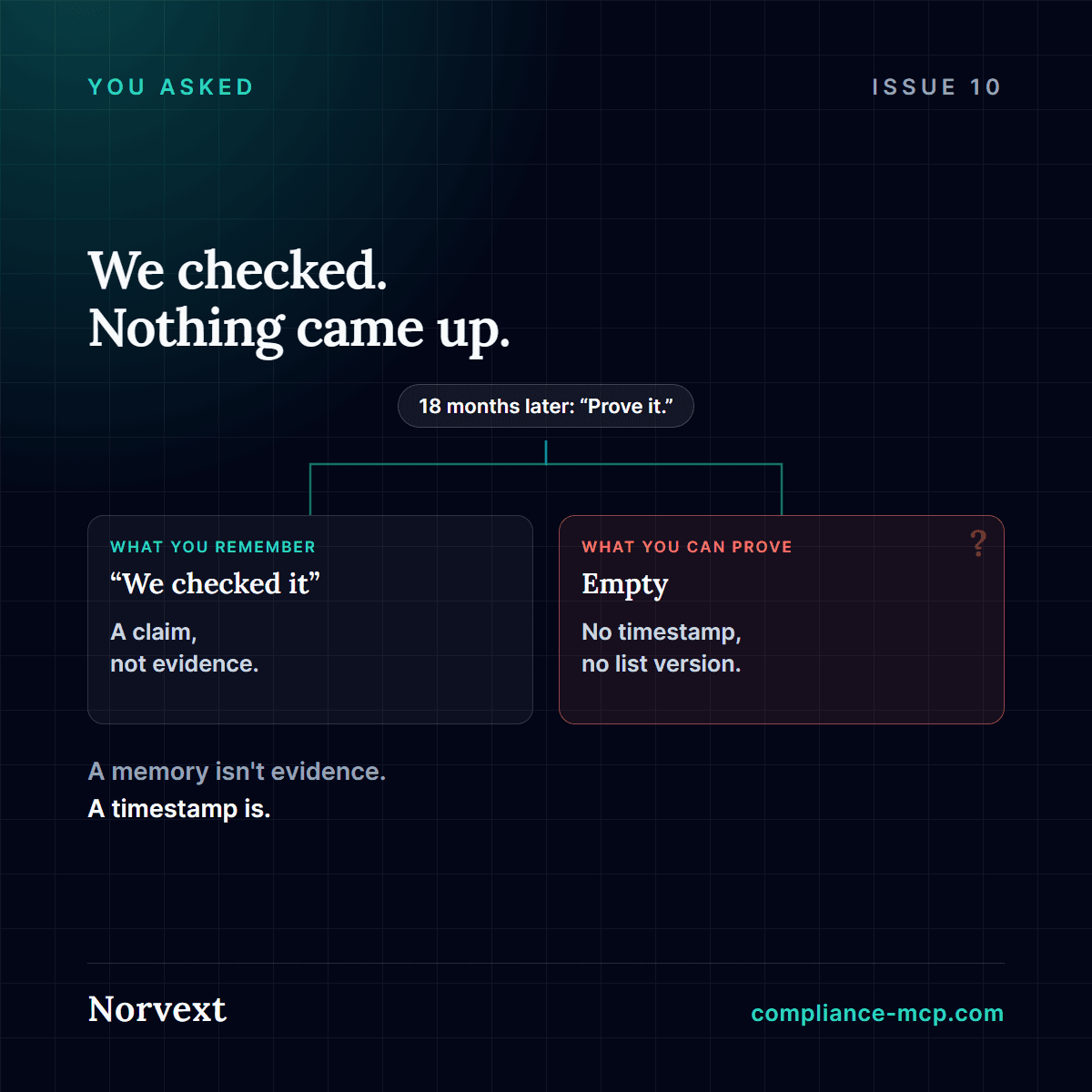
We checked. Nothing came up.
A clean result today doesn't prove what you saw eighteen months ago. Sanctions lists change constantly, and overwriting yesterday's data destroys your own alibi.
Read publication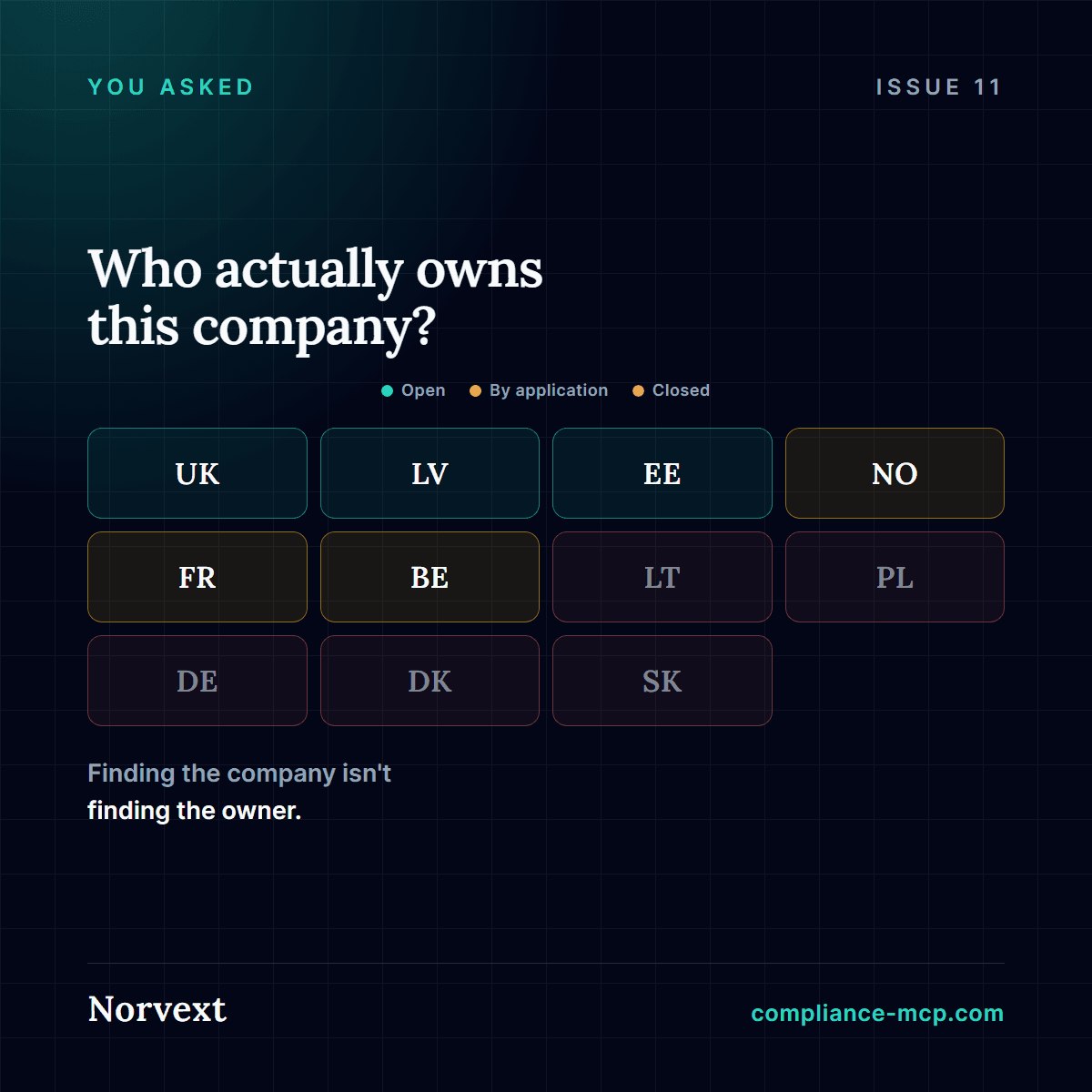
Who actually owns this company?
A registry that shows a company's directors doesn't show who owns it — and since a 2022 EU court ruling, most of Europe closed the second half to the public. Free, open beneficial-ownership data now means three countries, not twenty-seven.
Read publication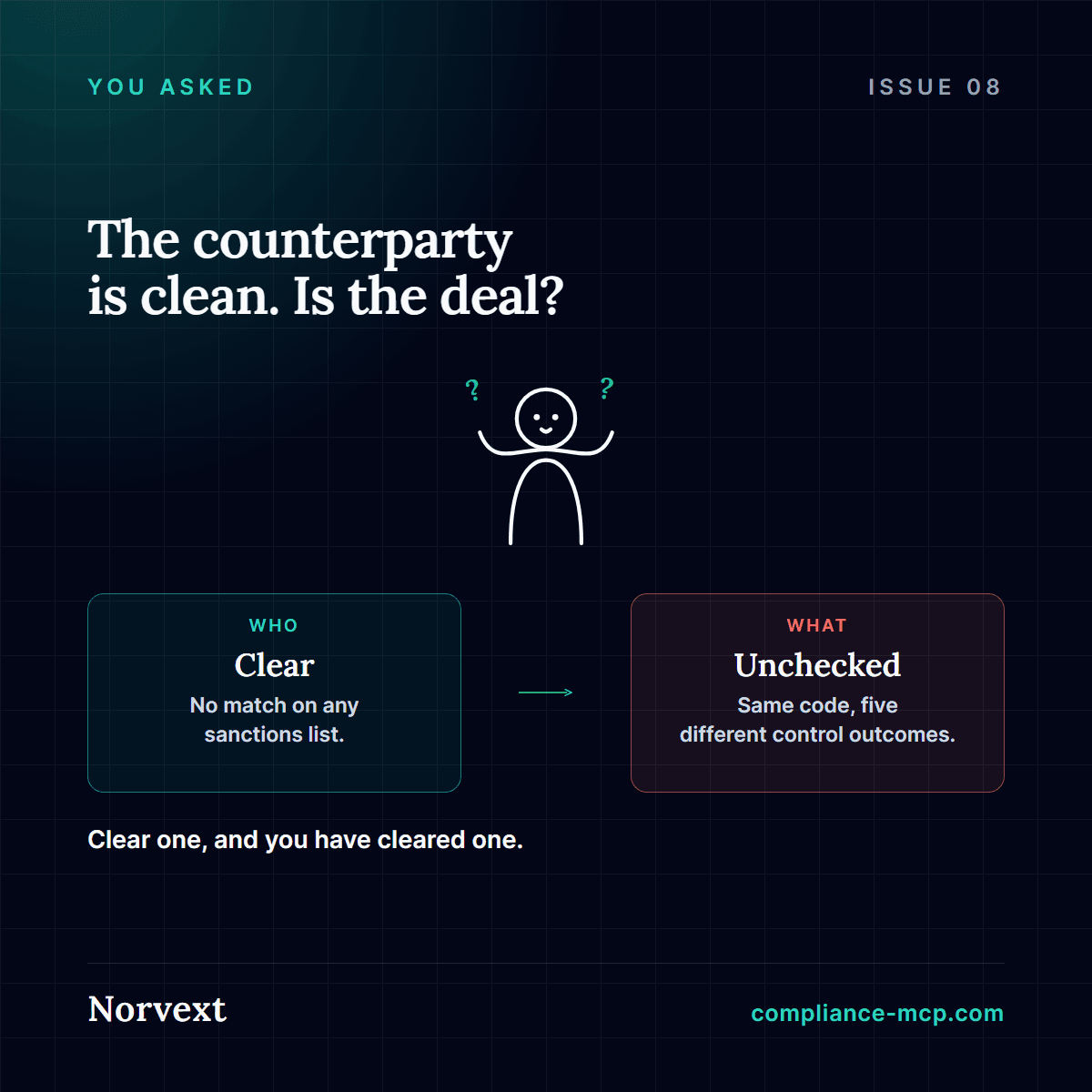
The counterparty came back clean. The deal is still illegal.
Screening the buyer answers one question. Whether the goods themselves are allowed into that destination is a separate one—and a clean counterparty result doesn't touch it.
Read publication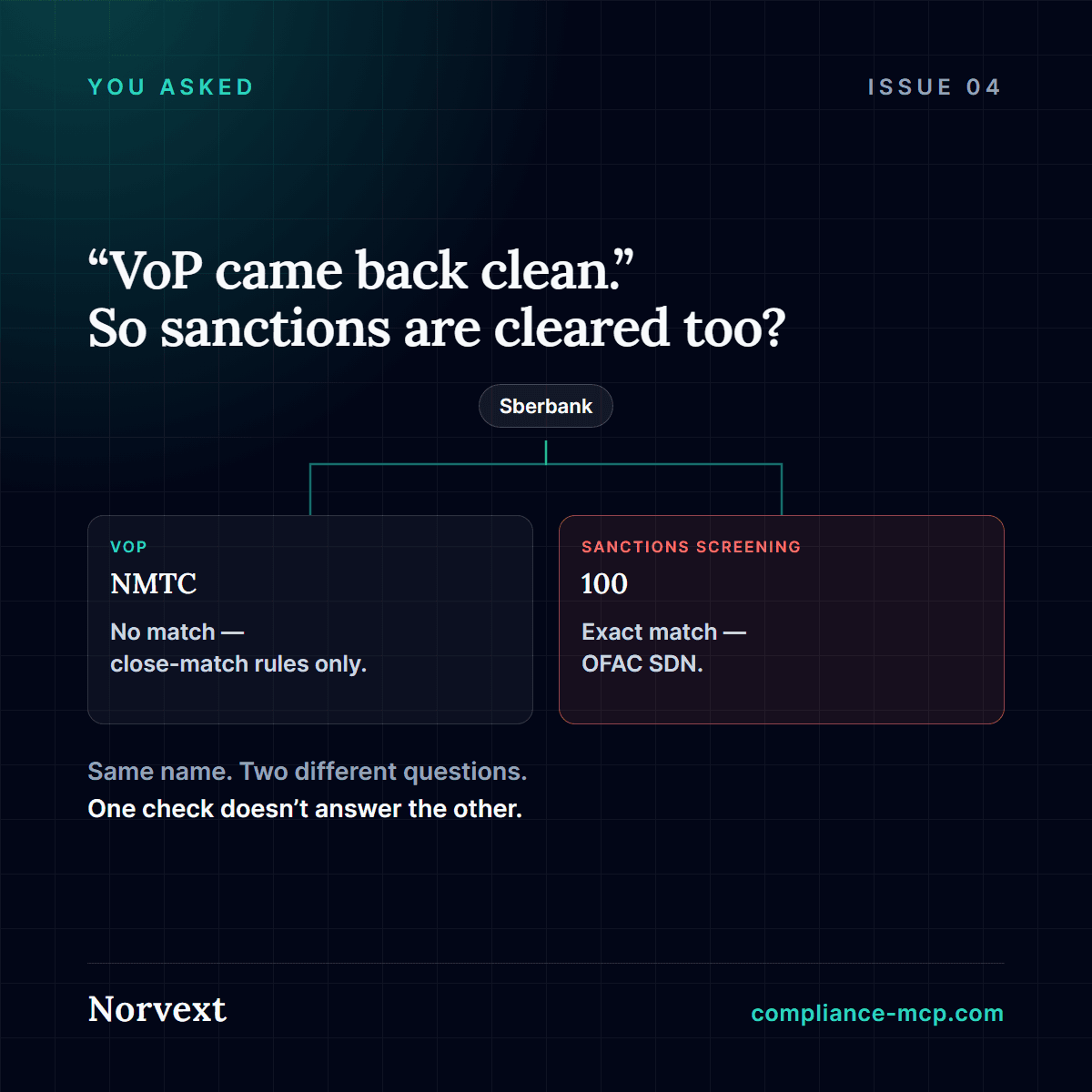
“VoP came back clean.” So sanctions are cleared too?
A Verification of Payee “no match” answers a narrower question than “is this sanctioned” — the two checks can genuinely disagree on the identical name, and only one of them is a sanctions clearance.
Read publication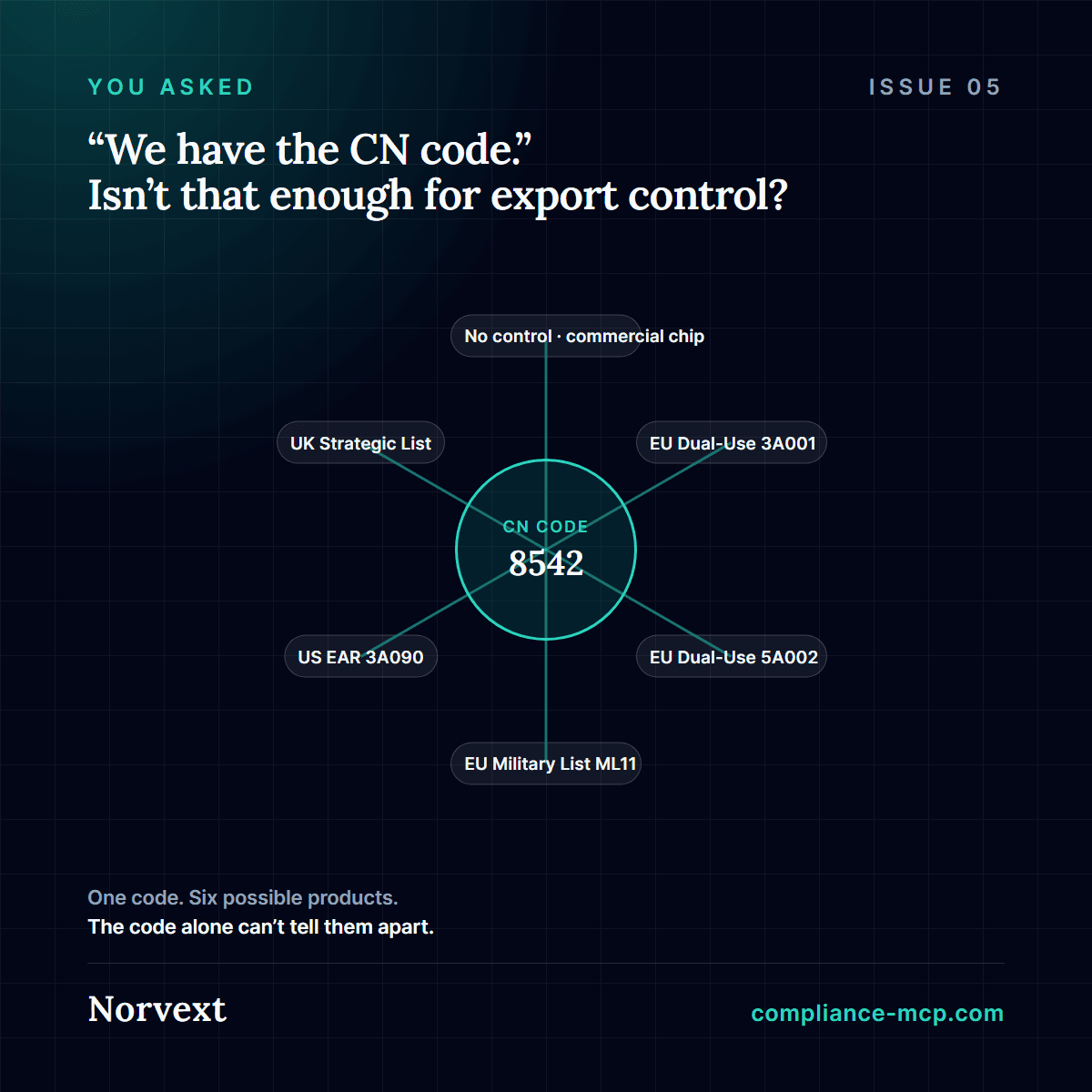
“We have the CN code.” Isn’t that enough for export control?
A CN/TARIC code is a customs classification, not an export-control determination — the same heading can cover a routine commercial item and a controlled dual-use or military one, and a bare code search finds almost none of that difference.
Read publication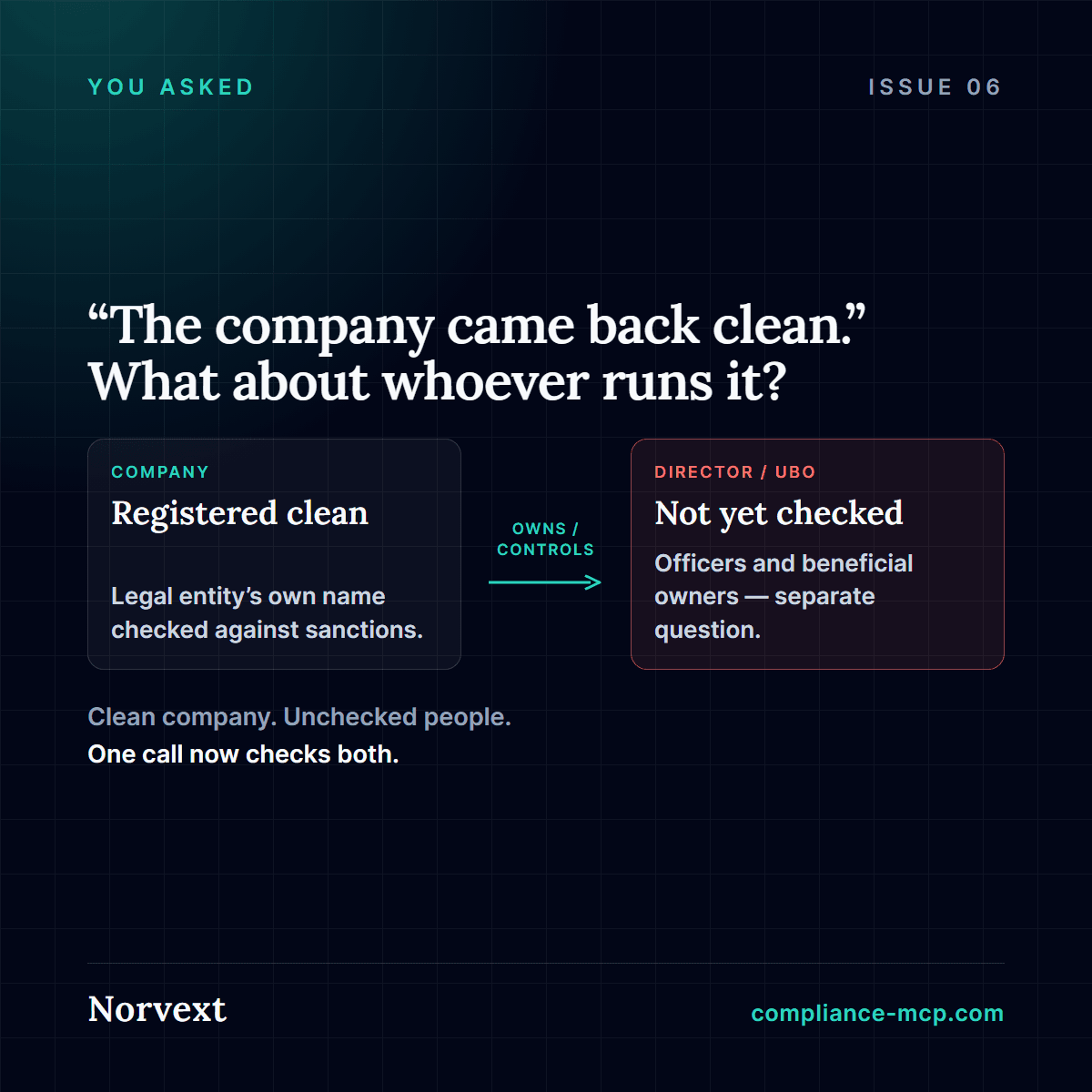
“The company came back clean.” What about whoever’s actually running it?
A clean company screening checks the legal entity’s own name against sanctions lists — it says nothing about the officers and beneficial owners behind it, and one of those people can be sanctioned while the company itself has never been listed.
Read publication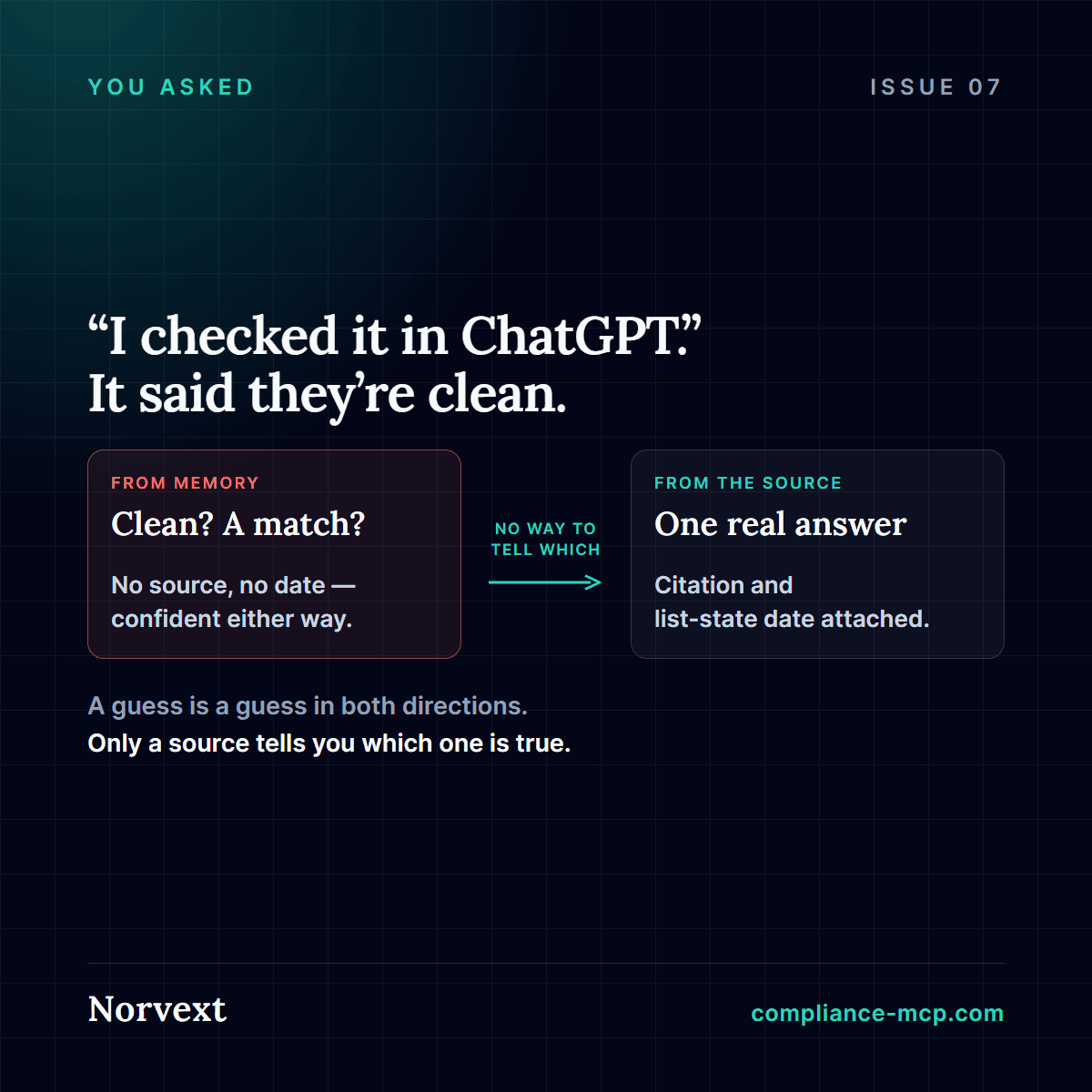
“I checked it in ChatGPT.” It said they’re clean.
An answer with no source is unverifiable in both directions — it can wave through a real hit as confidently as it can flag a clean counterparty, and nothing in the reply tells you which one just happened.
Read publication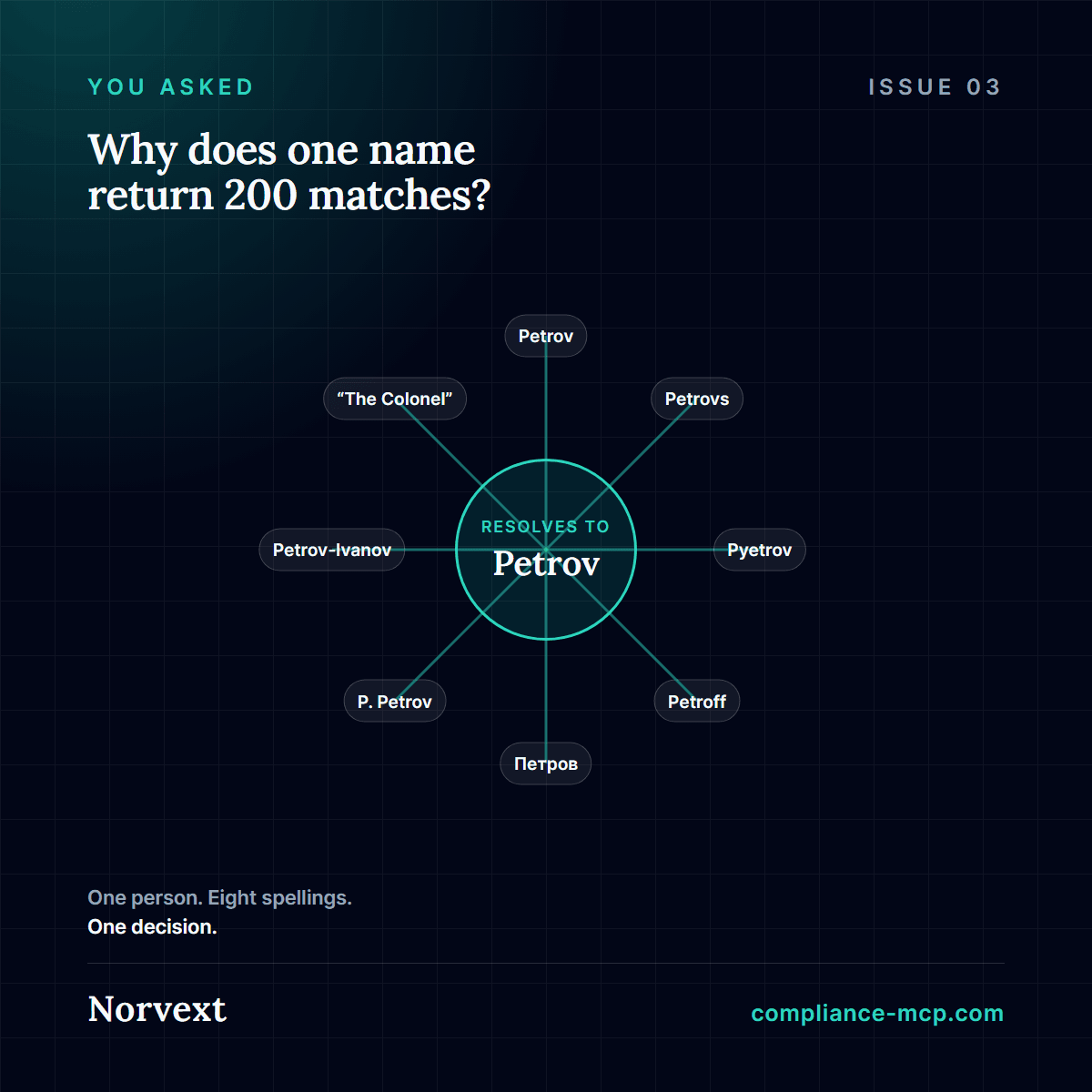
Why does one name return 200 matches?
A useful match count isn't low or high — it's explainable. Screening compares one identity against every spelling it has ever used, and a short name needs a second signal before it counts.
Read publication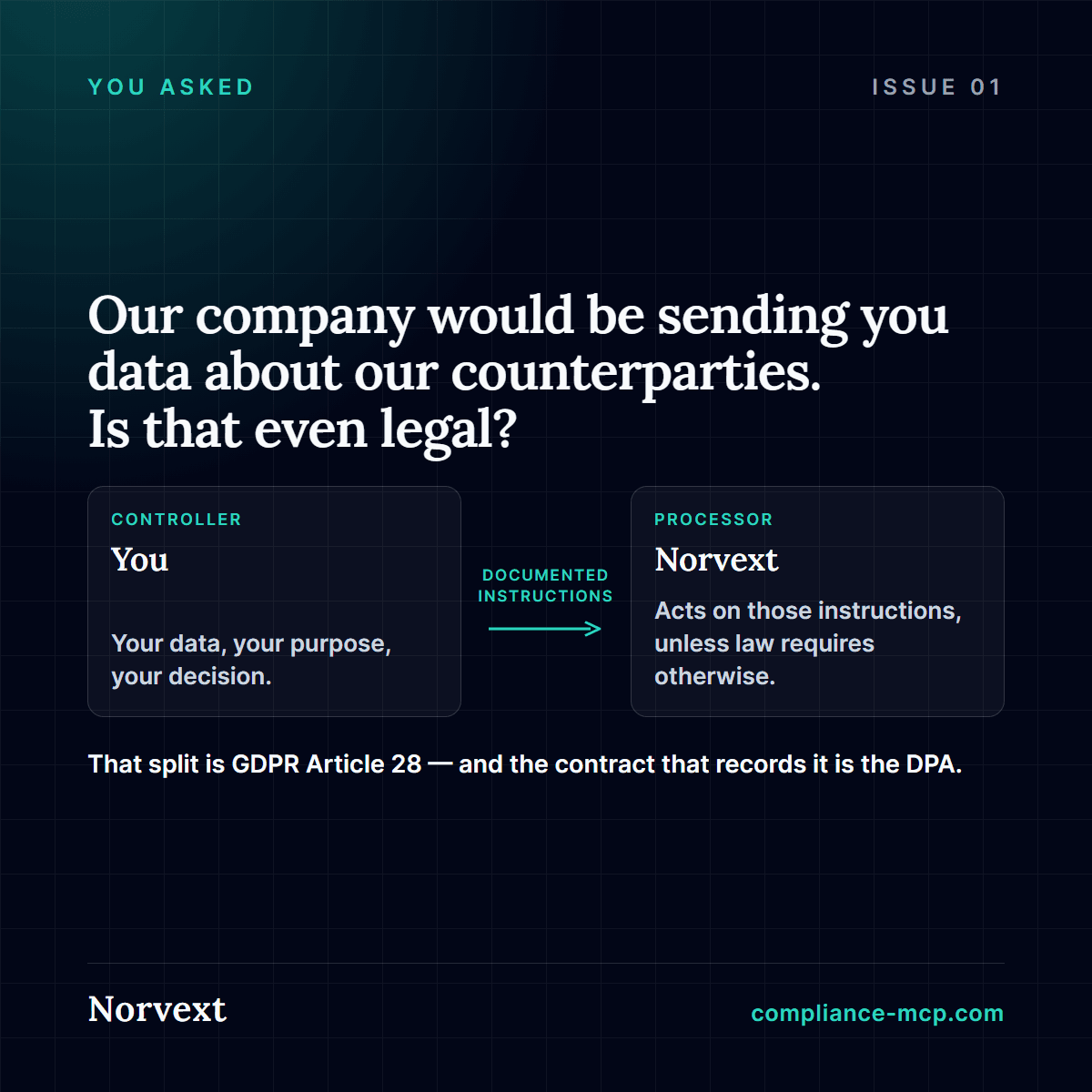
Is it legal to send counterparty data to Norvext?
The answer depends on roles, purpose and instructions—not on whether a name is typed into a compliance tool.
Read publication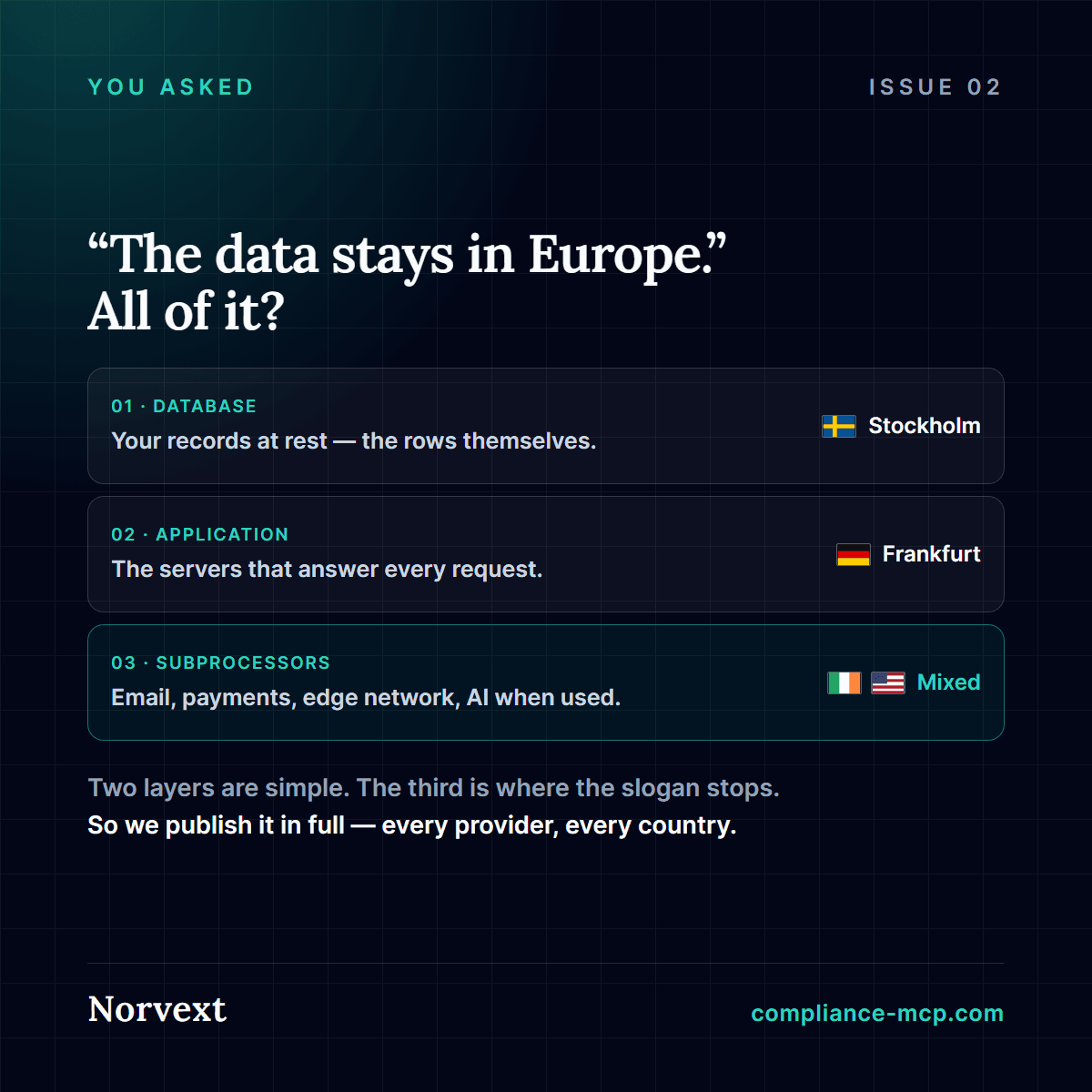
“The data stays in Europe.” All of it?
Data residency is not one location. A useful answer separates storage, application processing and the providers needed to run the service.
Read publication